Ingredients
Equipment
Method
- The Milk Soak: Place cleaned livers in a bowl and cover with milk for 30 minutes. This is the secret to removing the metallic tang. Drain and pat completely dry with paper towels.
- Dredge: In a shallow dish, whisk together the flour, table salt, black pepper, and nutmeg. Lightly coat the livers, shaking off all excess flour.
- High Heat Sear: Heat olive oil and 1 tbsp butter in a deep skillet over Medium-High. Once the butter foams, add the livers in a single layer. Sear for exactly 1 minute per side until a golden crust forms.
- Deglaze & Simmer: Immediately drop the heat to medium. Add the quartered and sliced onions directly into the pan along with the wine, vinegar, honey, and beef stock. Use a rubber spatula to gently scrape up the fond (brown bits) from the bottom of the pan.
- Reduce the Glaze: Simmer gently for 3 to 4 minutes. The onions will soften and absorb the liquids as the sauce reduces by half and thickens into a rich glaze.
- The Glossy Finish: Take the pan completely off the heat. Stir in the final 1 tbsp of cold butter, moving the livers gently until the sauce emulsifies into a glossy, velvet coating.
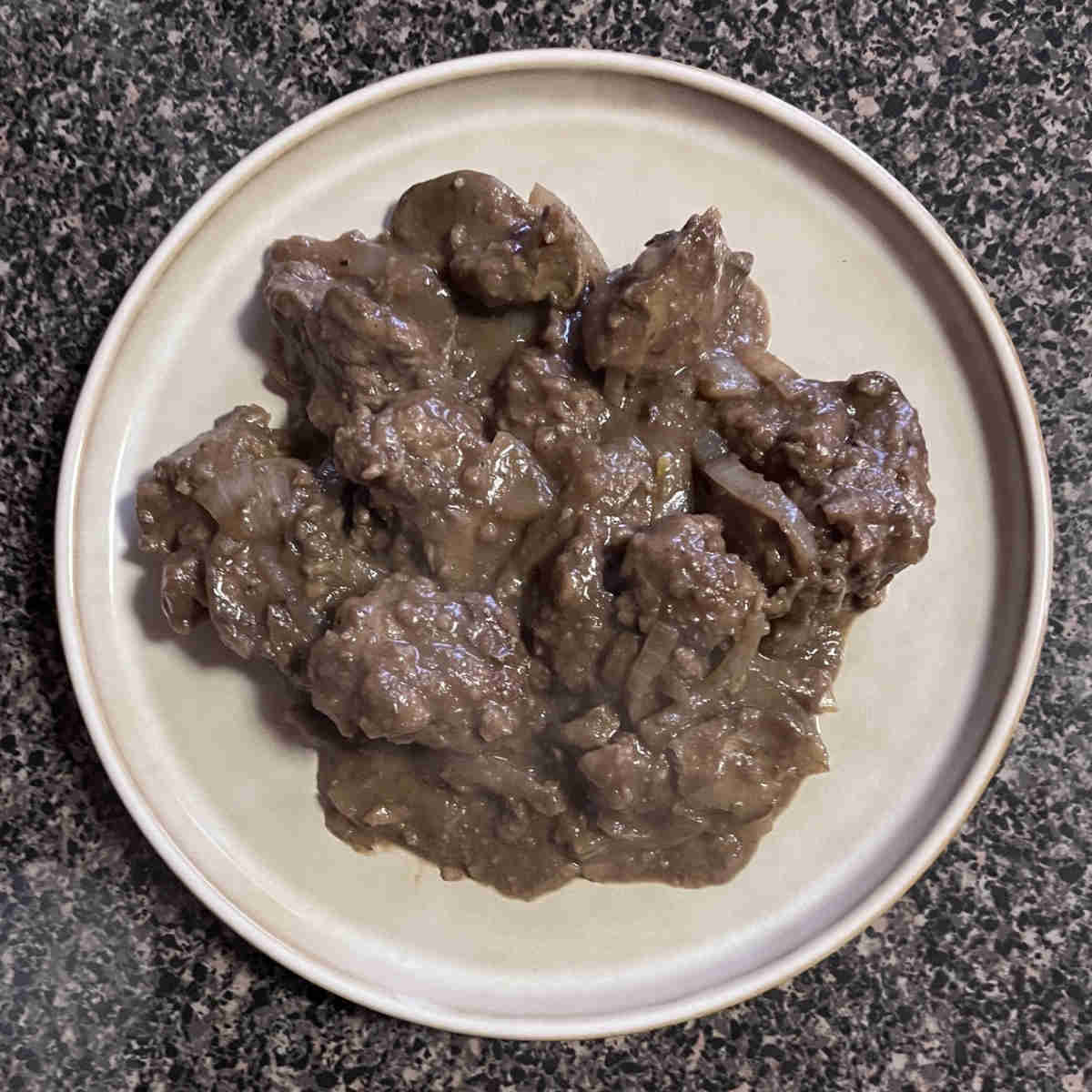
- Plate: Transfer to a warm serving plate. Serve immediately.
Nutrition
Notes
1. The “Purge” is Non-Negotiable
For the best flavor, do not skip the milk soak. Chicken livers can have a strong metallic tang; the calcium in the milk helps neutralize this and draws out excess blood, resulting in a much creamier, milder flavor profile that appeals even to those who think they don't like it.
2. Texture Audit: Quartering vs. Slicing
We recommend quartering the onion before slicing to ensure the pieces are sturdy. Thinly sliced “strings” of onion will disintegrate during the high-heat deglazing process. Quartered segments provide a hearty, rustic mouthfeel that stands up to the meatiness of the liver.
3. The “Ghost” Ingredient
The 1/8 tsp of nutmeg is our secret “Heritage” ingredient. It shouldn’t make the dish taste like dessert; rather, it acts as a bridge between the earthy liver and the acidic red wine glaze. It adds a layer of “Ancestral” depth that is highly characteristic of traditional Sicilian cooking.
4. 2026 Health Note (Nutrient Density)
This dish is a true nutrient powerhouse. While naturally packed with high-quality protein, iron, and Vitamin A, you can easily make the entire meal fiber-forward by serving it alongside rustic sautéed bitter greens, broccoli rabe, or ancient grains.
5. Wine Selection
For the most authentic flavor, use a dry Sicilian red like Nero d’Avola. If that isn’t available, a good Chianti or a dry Cabernet Sauvignon works beautifully. Avoid grocery store “cooking wine” as it contains excessive sodium and artificial preservatives.
