
Sicilian chicken livers and onions are all about bold, honest flavor — tender livers, sweet onions, and a sharp‑meets‑sweet glaze that hits every part of your palate. It’s rustic, comforting, and far more delicious than its humble appearance suggests.
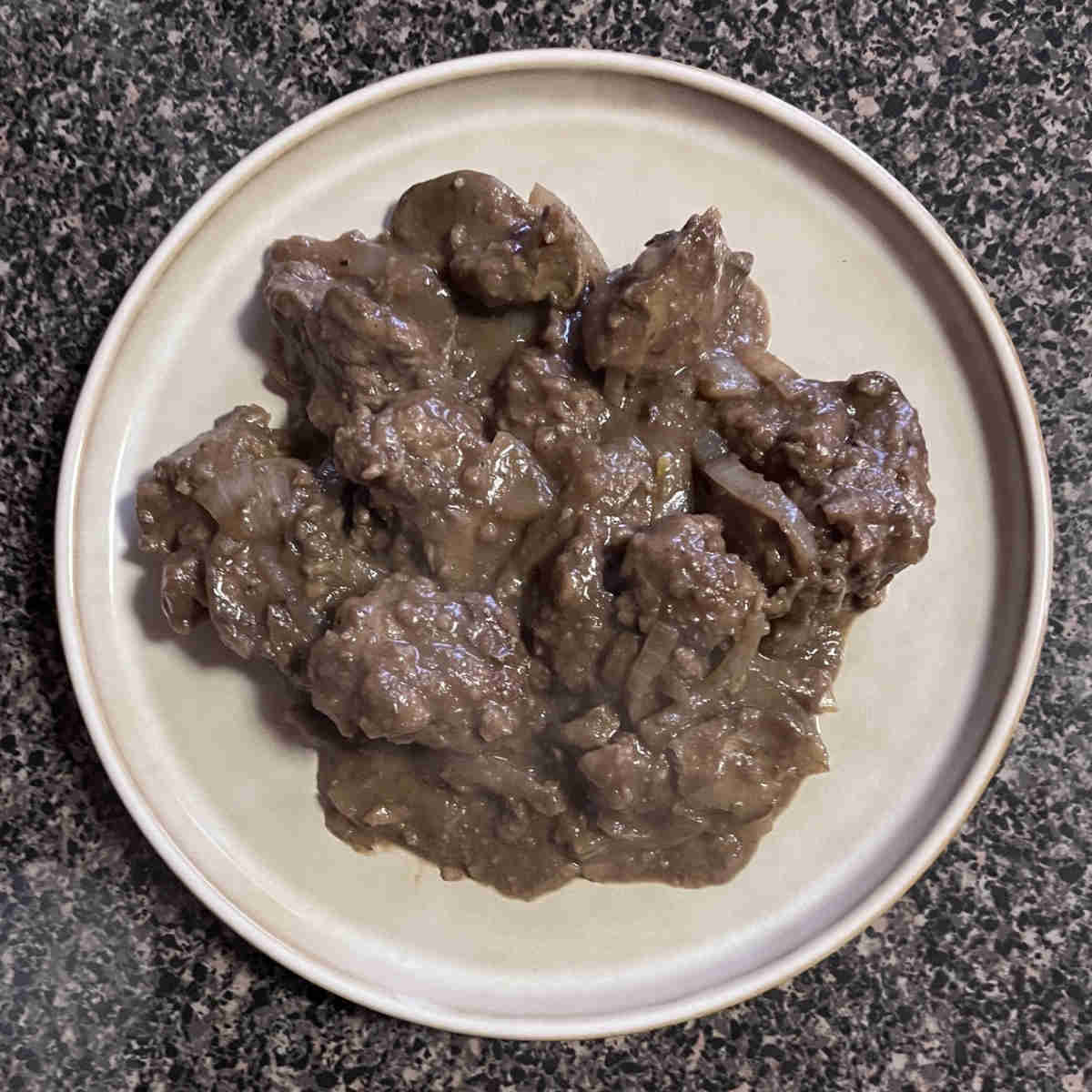
Sicilian Chicken Livers & Onions
Master a traditional Sicilian agrodolce technique with this efficient, one-pan method. By combining a high-heat sear with a deliberate temperature drop, chicken livers stay tender and perfectly pink at the center while building a velvety red wine, vinegar, and honey glaze. Balanced with robust, quartered yellow onions and a subtle whisper of nutmeg, it delivers a deeply savory, nutrient-dense heritage meal in under twenty minutes.
Ingredients
The Prep & Sear
- 1 lb Chicken Livers (cleaned and trimmed)
- 1 cup Whole Milk (for soaking/purging)
- 1 Large Yellow Onion (Quartered and Sliced for mouthfeel)
- 2 tbsp Olive Oil
- 2 tbsp Unsalted Butter (Divided: 1 for sauté, 1 for the finish)
The Seasoned Flour
- 1/2 cup All-Purpose Flour
- 1/2 tsp Table Salt
- 1/2 tsp Coarse Black Pepper
- 1/8 tsp Ground Nutmeg (The “Ghost” ingredient)
The Sicilian Glaze
- 1/2 cup Dry Red Wine (Chianti or Nero d’Avola)
- 2 tbsp Red Wine Vinegar
- 1 tbsp Honey
- 1/4 cup Beef Stock (The “Bridge” to balance acidity)
Equipment
- 1 Deep Skillet
- 1 Rubber Spatula
- 1 Fine Mesh Strainer
- 1 Chef’s Knife
- 1 Cutting Board
- 1 Mixing Bowl Set
Instructions
- The Milk Soak: Place cleaned livers in a bowl and cover with milk for 30 minutes. This is the secret to removing the metallic tang. Drain and pat completely dry with paper towels.
- Dredge: In a shallow dish, whisk together the flour, table salt, black pepper, and nutmeg. Lightly coat the livers, shaking off all excess flour.
- High Heat Sear: Heat olive oil and 1 tbsp butter in a deep skillet over Medium-High. Once the butter foams, add the livers in a single layer. Sear for exactly 1 minute per side until a golden crust forms.
- Deglaze & Simmer: Immediately drop the heat to medium. Add the quartered and sliced onions directly into the pan along with the wine, vinegar, honey, and beef stock. Use a rubber spatula to gently scrape up the fond (brown bits) from the bottom of the pan.
- Reduce the Glaze: Simmer gently for 3 to 4 minutes. The onions will soften and absorb the liquids as the sauce reduces by half and thickens into a rich glaze.
- The Glossy Finish: Take the pan completely off the heat. Stir in the final 1 tbsp of cold butter, moving the livers gently until the sauce emulsifies into a glossy, velvet coating.
- Plate: Transfer to a warm serving plate. Serve immediately.
Nutrition
Serving: 2ServingsCalories: 801kcalCarbohydrates: 49gProtein: 47gFat: 41gSaturated Fat: 15gPolyunsaturated Fat: 5gMonounsaturated Fat: 17gTrans Fat: 1gCholesterol: 827mgSodium: 855mgPotassium: 925mgFiber: 2gSugar: 18gVitamin A: 25676IUVitamin C: 46mgCalcium: 200mgIron: 22mg
Notes
1. The “Purge” is Non-Negotiable
For the best flavor, do not skip the milk soak. Chicken livers can have a strong metallic tang; the calcium in the milk helps neutralize this and draws out excess blood, resulting in a much creamier, milder flavor profile that appeals even to those who think they don’t like it.
2. Texture Audit: Quartering vs. Slicing
We recommend quartering the onion before slicing to ensure the pieces are sturdy. Thinly sliced “strings” of onion will disintegrate during the high-heat deglazing process. Quartered segments provide a hearty, rustic mouthfeel that stands up to the meatiness of the liver.
3. The “Ghost” Ingredient
The 1/8 tsp of nutmeg is our secret “Heritage” ingredient. It shouldn’t make the dish taste like dessert; rather, it acts as a bridge between the earthy liver and the acidic red wine glaze. It adds a layer of “Ancestral” depth that is highly characteristic of traditional Sicilian cooking.
4. 2026 Health Note (Nutrient Density)
This dish is a true nutrient powerhouse. While naturally packed with high-quality protein, iron, and Vitamin A, you can easily make the entire meal fiber-forward by serving it alongside rustic sautéed bitter greens, broccoli rabe, or ancient grains.
5. Wine Selection
For the most authentic flavor, use a dry Sicilian red like Nero d’Avola. If that isn’t available, a good Chianti or a dry Cabernet Sauvignon works beautifully. Avoid grocery store “cooking wine” as it contains excessive sodium and artificial preservatives.

Perfect Pairings
Alternative Options
Tried one of our recipes and made it your own? Or have a recipe idea we can work with?
We would love to hear from you!
- Sign up for the Sunday Simmer Newsletter
- Sync my Favorites across all devices
- Share a Recipe Idea with the Pasta Tempo Kitchen
- Comment on a Recipe
Choose the options that make sense for you.


Leave a Reply